With the 2026 midterm elections approaching, and Congress focused on completing its work for the year, the PAA Government and Public Affairs Committee (GPAC) is addressing multiple issues in the federal policy environment. Below is a high-level summary of recent, major issues GPAC and PAA Office of Government Affairs has been responding independently as well as collaboratively with PAA’s coalition partners in Washington, DC.
Congress Keeps the Government Funded, for Now
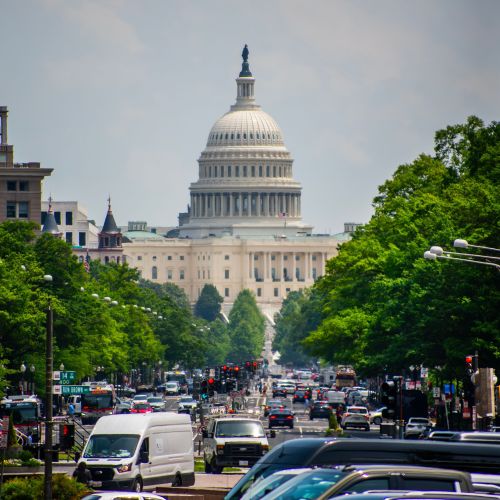
Congress has already taken one important fiscal issue off the immediate to-do list. The House of Representatives and Senate passed a continuing resolution (CR), signed by the President on September 2, that will keep the federal government funded through December 11.
In addition to funding the federal government for the first few months of the new fiscal year, the CR contains other provisions important to PAA. Most significantly, the CR includes a section that delays implementation of the Office of Management and Budget’s (OMB) proposed rule governing federal financial assistance for the duration of the CR. It also provides the Census Bureau with a modified funding anomaly to support preparations for the 2030 Census during this period.
While the CR removes the threat of an imminent federal government shutdown when the current fiscal year ends on September 30, the Fiscal Year (FY) 2027 appropriations cycle is far from over. The House has passed three of the 12 appropriations bills on the floor, while, as of September 21, the U.S. Senate had not yet released bill text for any of its bills. It is not clear when the Senate appropriations bills will be unveiled. The leaders of the House Appropriations Committee, on the other hand, are committed to passing all FY 2027 appropriations bills before the end of the year. Clearly, the FY 2027 appropriations process will not be resolved until Congress returns to Washington, DC for a “lame duck” session, which will be scheduled after the November 3 midterm elections.
See table below summarizing the FY 2027 appropriations marks for PAA’s priority federal agencies.
OMB Federal Financial Assistance Rule Remains a Top Concern
PAA continues to strongly oppose the proposed OMB rule governing federal financial assistance. During the recent, truncated public comment period that ended in July, PAA and the Association of Population Centers (APC) submitted two sets of comments: 1) requesting a 60-day extension of the comment period, which OMB rejected, and 2) a lengthy response opposing sections of the proposal addressing review of awards, award termination, allowable charges, and international collaborations.
The implementation delay included in the CR creates an important window for continued advocacy. Over the next several months, PAA will continue making the case for rescinding the rule. You can help by responding to the PAA Action Alert, which will automatically send messages to the members of your congressional delegation and share PAA’s views. However you think your elected officials may feel about the OMB proposal, they need to hear from their constituents so they can be informed about their positions and priorities.
NICHD Population Research Centers Continue to Wait
Another major concern PAA has been working on is the prolonged delay of the National Institute of Child Health and Human Development (NICHD) Population Dynamics Research Infrastructure Program (iPOP) Notice of Funding Opportunity (NOFO). The program’s NOFO has now been delayed for nearly 20 months. Fortunately, eight existing centers recently received bridge funding, but uncertainty over the program’s NOFO remains. While PAA has not issued an action alert, targeted members are communicating with leaders at the National Institutes of Health (NIH) as well as with specific congressional offices and staff about the scientific impact of the NOFO delay and to encourage its release.
Continuing Threats to NSF’s Social, Behavioral and Economic Sciences
PAA is also engaged, especially with coalition partners at the Consortium of Social Science Associations (COSSA), on actions affecting the National Science Foundation’s Directorate for Social, Behavioral and Economic Sciences (SBE).
The President’s FY 2027 budget proposed eliminating SBE. Typically, proposals in the president’s budget are not implemented until Congress reviews and responds. However, the Administration is taking a different approach, allowing NSF to dismantle the SBE Directorate in FY 2026. As evidence, SBE was removed from recent award solicitations, including the latest Graduate Research Fellowship Program announcement.
In addition to releasing an initial statement, PAA is taking several steps to encourage support for the SBE Directorate. During meetings with congressional staff in Washington, DC and at the local level, PAA members are expressing support for report language in the FY 2027 Commerce, Justice, Science Appropriations bill, which funds NSF, requiring the agency to maintain the integrity of all its directorates, including SBE. PAA and APC also submitted comments in response to an NSF request for information concerning alignment of the agency's financial assistance policies with the proposed OMB rule. Further, PAA re-issued a COSSA action alert to encourage PAA members to send messages of support for the NSF SBE to Congress. If you haven’t responded to the action alert, please consider doing so as soon as possible.
Negotiations are ongoing!
Multiple Census Issues Raising Concerns
Several developments at the Census Bureau and Department of Commerce, the Census Bureau’s parent agency, have also attracted significant attention in recent months.
Disclosure Avoidance Order
In June, the Commerce Department issued a disclosure avoidance order (DAO), limiting the types of privacy protection methods that the Census Bureau and Bureau of Economic Analysis (BEA) can use for their data products. Specifically, the order limits the Census Bureau and BEA to the use of “coarsening” (rounding, aggregating, and reporting in ranges) or suppression (not reporting). The order was effective upon its release.
PAA along with several scientific societies, including the Association of Public Data Users and Council of Professional Associations on Federal Statistics, issued a statement expressing concern about the order. The statement criticizes the order, saying it “subverts processes developed over decades to foster transparency and public trust and creates a scenario in which there will either be less privacy for our personal information, or less usable data, or both.” In addition to signing the multi-society statement, PAA issued an action alert.
In August, because of the DAO, the Census Bureau announced that the release of the 2025 American Community Survey (ACS) 1-year estimates is indefinitely delayed. PAA joined over 100 organizations on a letter led by The Census Project, expressing concern about the ACS delay and urging Commerce Secretary Lutnick to work with the Census Bureau to expedite release of the ACS estimates.
Proposed rule on Decennial Census Residence Criteria
On September 10, the Census Bureau released a proposed rule that would dramatically change the conduct of the 2030 Census. Specifically, the Bureau announced proposed changes that would exclude non-U.S. citizens without a green card from the apportionment base (which is used to determine congressional representation), dramatically change residence rules, and remove race and ethnicity questions from the decennial census questionnaire. The public has until October 13 to submit comments.
PAA plans to submit comments on the proposed rule and has also signed a letter led by The Leadership Conference on Civil and Human Rights to OMB encouraging an extension of the comment period.
Stay Engaged
The coming weeks and months will be critical for many of the federal policies and programs that support the population sciences. PAA will continue advocating on behalf of the population sciences and alerting members when their voices can make a difference. Please watch for PAA action alerts and other opportunities to engage with congressional offices to educate them about the critical direct and indirect role federal scientific and statistical research agencies play in supporting our field.
|
Agencies
|
Final FY 2025
|
FY 2026 President’s Request
|
Final FY 2026
|
FY 2026 vs FY 2025
|
|
AHRQ
|
$369 million
|
$240 million
|
$345.4 million
|
-6.4%
|
|
BLS
|
$698 million
|
$648 million
|
$708.5 million
|
+0.6%
|
|
Census Bureau
|
$1.38 billion
|
$1.67 billion
|
$1.49 billion
|
+7.8%
|
|
IES
|
$793.1 million
|
$261.3 million
|
$789.6 million
|
-0.4%
|
|
NCHS
|
$187.4 million
|
$175 million
|
$187.4 million
|
0.0%
|
|
NIH
|
$47.1 billion
|
$27.9 billion
|
$47.2 billion
|
+0.9%
|
|
NSF
|
$9.06 billion
|
$3.903 billion
|
$8.75 billion
|
-3.4%
|
#latest-news
#GPAC2026
#Census
#FederalFunding
#NSF
#NIH